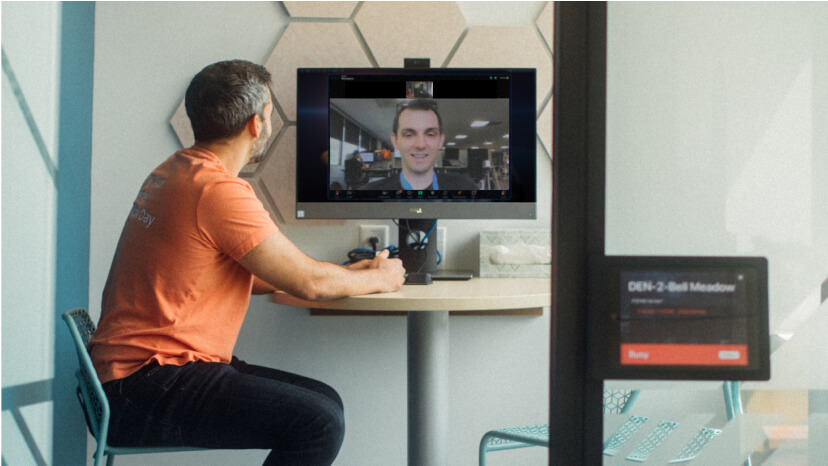
Zoom Workplace is here! Reimagine teamwork with your AI-powered collaboration platform
Zoom Workplace brings communication, employee engagement, spaces, and productivity solutions together on a single platform with AI capabilities woven throughout.
Learn how AI and technology can come together to help cultivate employee engagement by creating the right work environment for employees to succeed.
Published on May 28, 2024
Technology is central to how businesses operate, but it’s also an essential part of the employee experience. Because technology is so embedded in how we communicate and collaborate at work, the right mix of tools can help improve productivity and engagement, while disparate or difficult-to-use solutions can have the opposite effect of slowing teams down or leading to siloed communication.
At our recent Work Transformation Summit, Zoom customers Yasufumi “Yasu” Hirai, group executive vice president and chief of staff to the CEO at Rakuten Group, and Earl Newsome, CIO at Cummins, shared how technology shapes the employee experience and their recommendations for engaging a global workforce.
Key employee engagement strategies included:
Read on for an in-depth look at how these strategies come to life at Rakuten and Cummins.
AI is at the forefront of many organizations’ innovation strategies, but it’s also being woven into the employee experience. Automating certain processes like note-taking takes the “busy work” off your employees’ plates so they can focus on more impactful work.
While Yasu believes AI is important for business goals like optimizing total cost of ownership (TCO), maximizing return on investment (ROI), and accelerating time to market, it should also be used to enhance human capabilities and support creativity. “AI stands for artificial intelligence, but to me, AI should stand for augmented intelligence, or augmented insights,” Yasu said. “It doesn’t replace human beings — it augments humans to enhance our creativity.”
As companies prepare for an AI-driven economy, Yasu and Earl both spoke about new job titles, like AI engineer and data artist, being created to address future needs. Retraining and reskilling existing employees to be effective with AI technology is and will continue to be a part of the employee experience moving forward.
If you want your employees to thrive in their role, they need to be able to focus on the work itself — not be worried about whether they have all the resources they need to do their job. Providing employees with tools and training enables them to feel prepared to meet whatever goals they have.
“Whether we’re automating workflows, removing manual steps from complicated activities, or removing the need to take notes so you can focus intently on the person you’re working with to solve a problem, we’re trying to make sure each and every one of our employees has the right tools to get the job done, make sure they’re trained on the utilization of those tools, and space to explore and experience those tools to get the best out of them,” Earl said.
Corporate culture has become a buzzword over the years, but what exactly does it mean? Culture extends beyond company happy hours and mission statements — it’s about whether your employees understand your organization’s “why” and how it shows up in their day-to-day work, providing them with an emotional connection to the company and their role in it.
Rakuten is a global company with many service areas, but even though employees may be separated by location or line of business, they’re all connected by a corporate culture known as “Rakuten Shugi.” According to Yasu, all employees around the world know what “Rakuten Shugi” means and believe in its value — a key component for success. “Corporate culture isn’t something employees need to adhere to, like a policy,” Yasu said. “Rakuten Shugi protects our employees in doing the right thing for our customers and the company.”
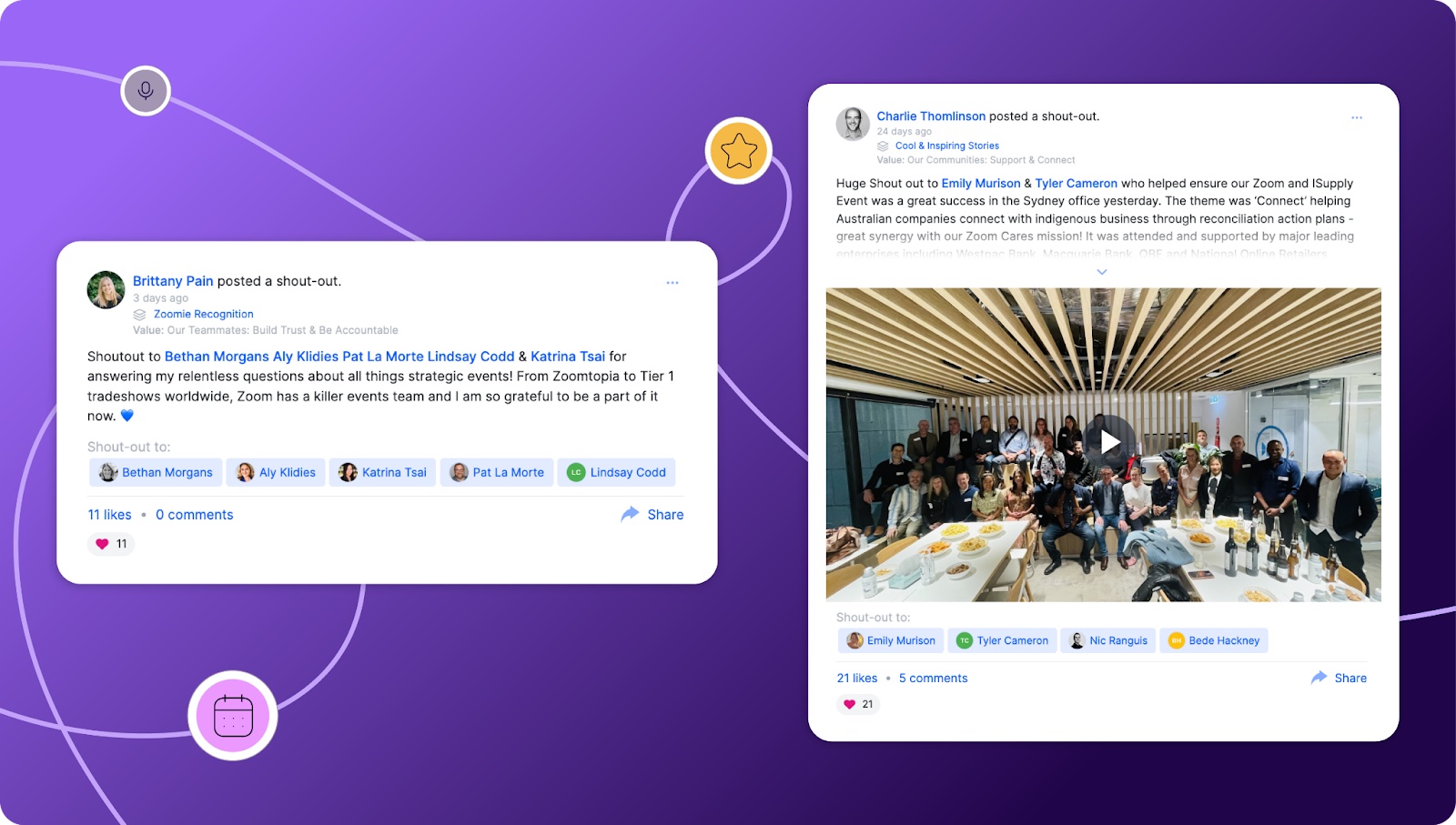
Yasu also touted the benefits of an employee recognition platform for building a strong company culture and improving well-being. Rakuten Symphony’s office in Germany implemented Workvivo, Zoom’s employee engagement platform, as a way to unify the team. Yasu said that one month after the launch, over 80% of employees had activated Workvivo and were posting news and shoutouts to recognize their peers.
“I believe employee engagement can be built on both a strong culture platform and on tools like Workvivo,” Yasu said.
Finally, workplaces with flexible models must be intentional in providing opportunities for connection and collaboration, which are key to the employee experience.
“Innovation is created through serendipity,” Yasu said, “and I believe Zoom Workplace is helping us, on a global basis, to create this serendipitous atmosphere among our employees.”
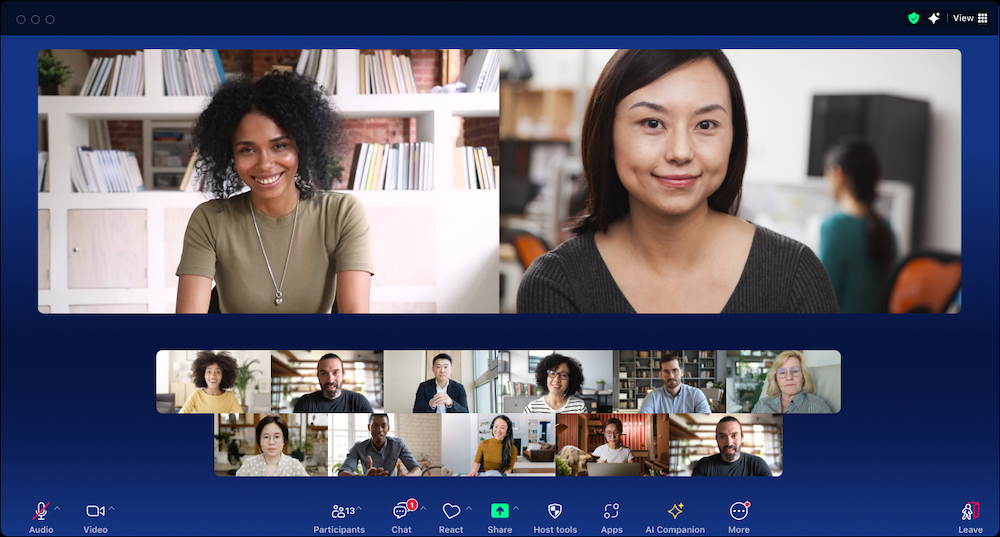
For remote or distributed team members, serendipity could involve cultivating spaces around shared personal interests or hosting coffee talks and office hours that encourage employees to gather and chat. Shared whiteboards or chat channels where team members can collaborate asynchronously might also promote new thoughts and impromptu brainstorms.